
The Hidden Cost of Cheap Rubbish Removal
A professional-looking waste removal advert, hundreds of five-star reviews and a cheap quote might seem reassuring. But how do you know the company collecting your rubbish is actually disposing of it legally?
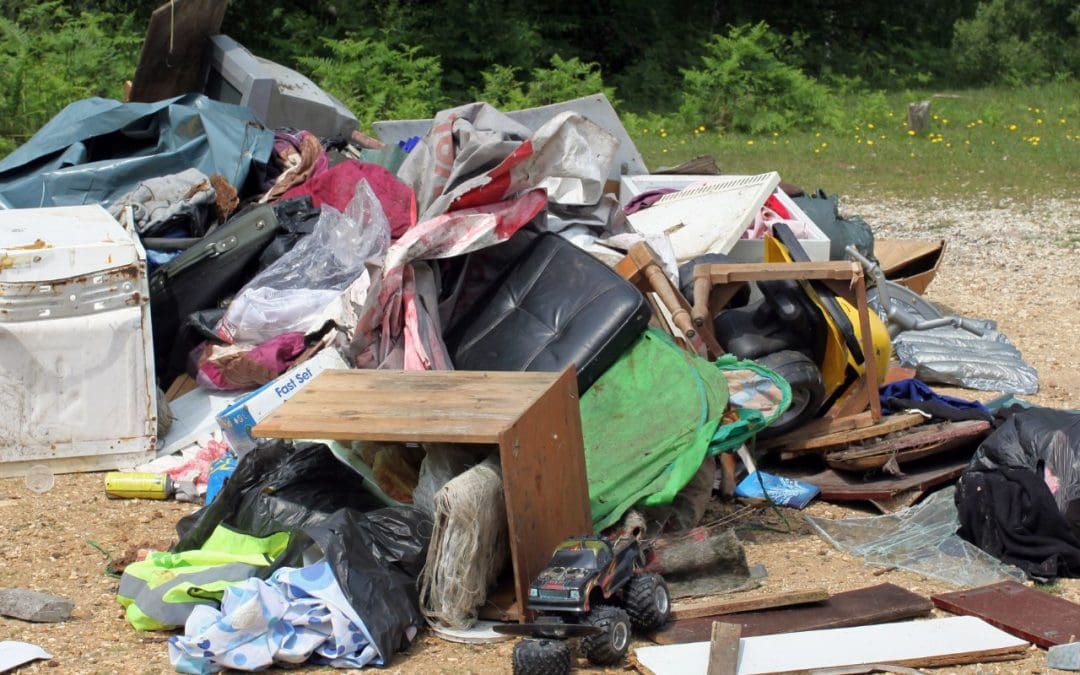
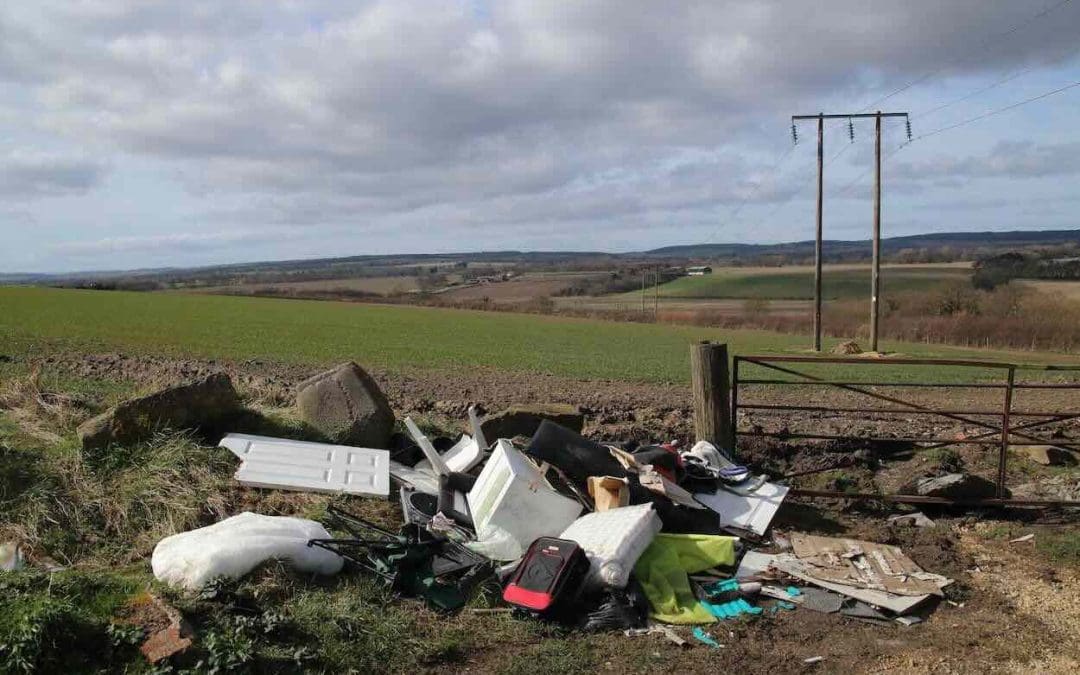
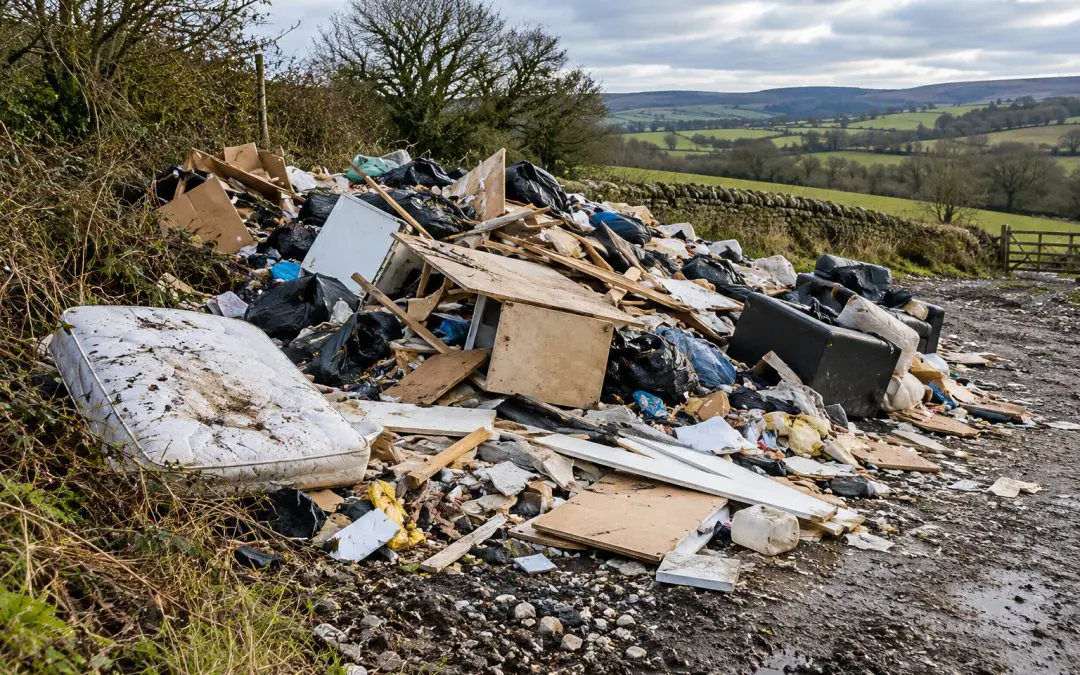
Across the UK, including on our doorstep in Leeds, illegally dumped waste continues to blight country lanes, woodland, farmland and beauty spots. From abandoned household furniture and building rubble to entire lorryloads of rubbish, fly-tipping is causing environmental damage, creating expensive clean-up operations and leaving landowners and local authorities to deal with the consequences.
What’s particularly concerning is that some of the businesses involved in illegal waste disposal can appear perfectly legitimate to the customers using them.
They may advertise on Facebook or Google, have a professional website, display glowing customer reviews and claim to be fully licensed.
With AI-generated imagery and inexpensive advertising tools, it’s also easier than ever to create convincing marketing materials, even for businesses with little or no established trading history.
For someone simply wanting an old sofa, a pile of garden rubbish or the contents of a house removed, distinguishing a responsible waste removal company from an operator cutting corners isn’t always straightforward.
At Leeds Junk & Rubbish, we believe customers deserve to understand what happens to their waste after it leaves their property, what responsible disposal actually costs and how to protect themselves from rogue operators.
Illegal waste dumping: Recent cases in Yorkshire and across the UK
The scale of the problem becomes clearer when you look at recent prosecutions. These aren’t simply isolated incidents of someone leaving a few black bags at the roadside. Some involve people collecting waste for payment, while others involve large-scale dumping operations or even registered waste carriers.
Leeds: Waste collected for cash and dumped across the city
In October 2025, Leeds City Council reported the successful prosecution of a man who had been collecting household waste for cash and illegally dumping it at locations in East End Park and Harehills.
David Seedo was convicted of 13 fly-tipping offences committed over a two-week period. Investigators traced the dumped rubbish back to a property where waste had been collected as part of a paid removal service.
The offender, who did not have the required waste carrier registration, received a 10-month prison sentence suspended for two years, 300 hours of unpaid work and an order to pay £2,100 to an affected landowner.
A criminal behaviour order also prohibited him from collecting or transporting waste and advertising waste removal services.
The case demonstrates how easily householders can become caught up in illegal waste disposal without realising it. What appears to be an ordinary paid collection can end with rubbish being dumped illegally just a short distance away.
Read the full Leeds City Council report >
North Yorkshire: Thousands of tonnes dumped at a countryside beauty spot
In March 2026, the Environment Agency reported that a farmer near Skipton had been sentenced after allowing thousands of tonnes of waste to be dumped at Pyethornes Farm in Wigglesworth.
The site, located in the North Yorkshire countryside, contained large quantities of shredded plastic, metal, electrical items and aerosols.
Investigators also discovered evidence that waste had been buried on the land.
Despite enforcement warnings, the illegal operation continued for more than a year.
Hayden Fortune received a 12-month prison sentence suspended for two years and was ordered to remove the waste within two years. He was also ordered to pay £10,000 in prosecution costs.
This case highlights the environmental damage that can result when waste is diverted away from properly authorised disposal facilities.
The cost of clearing these sites can be substantial, while the impact on the surrounding countryside can last far longer.
Read the Environment Agency report >
Derbyshire: Even a licensed waste carrier was convicted of fly-tipping
Another important case was reported by South Derbyshire District Council in June 2026.
A registered waste carrier, Thomas Chetwyn, was convicted of two fly-tipping offences after building waste from a property was illegally dumped at Moor Lane, Barrow upon Trent.
The discarded materials included timber, pallets, plastic sheeting, insulation and garden waste.
Investigators discovered paperwork among the rubbish that helped identify the offender.
Chetwyn was ordered to pay £4,579.72 in fines, compensation and prosecution costs.
What makes this case particularly relevant is that the offender was a registered waste carrier.
Being registered to transport waste does not automatically guarantee that a company will dispose of it responsibly.
Checking registration is an essential first step, but customers should also ask where their rubbish is going and whether it will be taken to an authorised waste facility.
Read the South Derbyshire District Council report >
Why does legitimate rubbish removal cost money?
One of the biggest misconceptions about rubbish removal is that the cost is simply paying someone with a van to collect unwanted items.
In reality, responsible waste removal businesses have several unavoidable costs to cover.
These include:
-
Commercial waste disposal and recycling charges.
-
Labour for loading and transporting waste.
-
Vehicle costs, fuel, maintenance and insurance.
-
Appropriate waste carrier registration and regulatory compliance.
-
Additional handling and disposal charges for certain materials, including electrical items, mattresses and hazardous waste.
Commercial waste disposal isn’t free, even when the rubbish originally came from a household.
Licensed waste removal businesses generally use commercial waste transfer and recycling facilities, where charges are applied according to the type, weight and volume of material being disposed of.
What does it actually cost to dispose of rubbish legally?
To put this into perspective, Leeds City Council publishes illustrative minimum disposal costs for commercial waste carriers collecting common household items.
Examples from the council’s published guidance include:
| Waste type | Minimum disposal cost |
|---|---|
| Mattress | £15.99 |
| Sofa and two armchairs | £36.25 |
| Sofa bed | £36.25 |
| Ten bags of garden waste | £28.78 |
| Fridge | £18.06 |
| TV or monitor | £26.65 |
| One roll of carpet | £53.30 |
| Bathroom suite | £53.30 |
These are illustrative council figures rather than fixed prices charged by every disposal facility. Actual costs depend on the waste type, weight and disposal arrangements.
Importantly, these figures do not include the cost of collecting the rubbish from your property, loading it, transporting it or running the business.
Consider someone advertising a sofa collection for £20 or a substantial load of household rubbish for £25.
If the legitimate disposal cost alone could exceed the advertised price, how is the operator covering their fuel, labour, vehicle costs and other expenses?
There may be genuine reasons for competitive pricing, such as efficient collection routes or combining nearby jobs.
But when a quote seems too cheap to cover the basic costs of doing the job properly, it’s reasonable to ask questions.
The cheapest quote isn’t necessarily the cheapest outcome, particularly if your rubbish ends up dumped somewhere it shouldn’t be.
Source: Leeds City Council – Getting rid of unwanted items
Your rubbish is still your responsibility
Many people assume that once they’ve paid somebody to take their rubbish away, their responsibility ends.
Unfortunately, that’s not necessarily the case.
Under household waste duty of care requirements in England, people must take reasonable steps to ensure they pass their waste to an authorised person.
If your rubbish is subsequently found fly-tipped and an investigation establishes that you failed to take reasonable steps to check the collector, you could face enforcement action.
This can include a fixed penalty notice or prosecution.
That doesn’t mean you’re automatically responsible whenever a waste collector acts illegally.
If you can demonstrate that you made reasonable checks and used an authorised operator, that is important evidence that you fulfilled your responsibilities.
The important point is that paying someone to remove rubbish doesn’t remove your duty to check who you’re handing it to.
How can you tell whether a waste removal company is legitimate?
Before booking a rubbish collection, there are some straightforward checks worth making.
1. Check their waste carrier registration yourself
Don’t simply accept a statement on a website saying ‘fully licensed’.
Ask for the company’s waste carrier registration number and check it independently on the Environment Agency’s public register.
For an ordinary commercial rubbish removal company transporting other people’s waste, you would generally expect a valid upper-tier registration.
Make sure the registered business details match the company you’re dealing with.
A registration number displayed in an advert is not, by itself, proof that the business using it is the registered operator.
You can check waste carrier registrations using the official Environment Agency public register.
2. Ask where your waste will be taken
A legitimate waste removal business should be able to explain how it handles the rubbish it collects.
Ask whether it is taken to an authorised waste transfer or recycling facility and how different materials are dealt with.
A waste carrier registration is important, but it doesn’t guarantee that every load will be disposed of correctly.
It’s sensible to ask about the disposal process as well.
3. Get a receipt and keep the business details
Ask for confirmation of the collection, including the business name, date and details of the service.
Keep the invoice or receipt and, ideally, a record of the waste carrier registration you checked.
For householders, a formal waste transfer note is not normally required simply to demonstrate that you’ve met your household duty of care, but retaining evidence of your checks is sensible.
For businesses arranging commercial waste removal, the documentation requirements are different and generally more extensive.
4. Be cautious about unusually cheap prices
Everyone wants good value, and there’s nothing wrong with comparing quotes.
However, if one company is dramatically cheaper than everyone else, ask how that price is possible.
A legitimate operator has unavoidable costs. If the price barely covers disposal, never mind collection, it’s worth investigating further.
5. Check the reviews, not just the star rating
A website claiming hundreds of five-star reviews can look reassuring.
But where have those reviews come from?
A company can place five stars and a glowing testimonial on its own website without providing any independent verification.
Look for reviews on established third-party platforms, such as Google, and check the actual business profile rather than relying on screenshots or review graphics.
Read a selection of reviews, including less positive ones. Look for specific experiences, a history of feedback over time and evidence that the business responds to customers.
Even genuine positive reviews don’t prove that waste is being disposed of legally, so they should support your other checks rather than replace them.
A professional-looking advert doesn’t prove a business is trustworthy
It’s now easier than ever to create convincing advertising.
With AI-generated images, ready-made website templates and inexpensive design tools, almost anyone can produce a polished-looking advert or website in a matter of hours.
A waste removal advert might feature spotless branded vans, uniformed workers, impressive before-and-after photographs and bold claims about reliability.
But those images don’t necessarily show the company’s real vehicles, employees or completed jobs.
AI-generated images aren’t inherently a problem. Many legitimate businesses use them in marketing.
The concern is when imagery creates a misleading impression of a company’s actual operations, experience or credentials.
The same applies to customer testimonials.
A professionally designed graphic showing five stars and the words ‘trusted by hundreds of customers’ is not independent evidence that those customers exist.
Before booking, look beyond the advert.
Can you identify the business? Does it have a genuine trading presence? Can you verify its waste carrier registration? Are its customer reviews independently accessible?
Professional marketing is not the same as professional waste management.
Warning signs to watch out for
There are several things that should make you look more closely before handing over your waste:
-
A price that seems impossibly low for the quantity or type of rubbish.
-
No verifiable waste carrier registration.
-
Refusal to explain where the rubbish will be taken.
-
No proper business details or receipt.
-
Pressure to pay immediately without clear collection details.
-
Five-star review claims that cannot be checked independently.
-
Stock or AI-generated imagery presented as evidence of real work.
-
A business name or registration number that doesn’t match official records.
None of these signs individually proves wrongdoing, but they are good reasons to carry out further checks.
Why choosing a responsible waste removal company matters
When you book rubbish removal, you’re trusting somebody to take responsibility for materials you no longer want.
You should be confident that the company is properly registered, transparent about its service and committed to handling waste responsibly.
Choosing a reputable operator also helps support businesses that invest in lawful disposal, staff, vehicles and the systems needed to operate correctly.
Illegal waste operators who avoid those costs can undercut responsible businesses, leaving the environmental and
QUICK CONTACT
Need help with waste removal?
Contact our team today.
contact page form
Form for contact page.
"*" indicates required fields

Leeds Junk & Rubbish Removal
4.9
Freya Hurley-hussain
"Amazing service, so quick. Only took a couple of hours from phone call to clearing my junk. The guys provided a fab service and they were really friendly, quick, efficient and the price was so good. Excellent thank you so much!"
Jamie Hector
"Very efficient and friendly service. Job done same day as contacting them. The two men who came were very accommodating and really helpful. Did the job really quickly. Would definitely recommend."
Rosanna Jordan
"A big thanks to Luke and Chris! They offered a fair quote for clearing out a large amount of waste from my sister-in-law’s garage. Hardworking, polite and professional, they even swept up after finishing the job. Highly recommended and I would to use their services again if needed!"